EXTRACTION
Peeled and squeezed at once
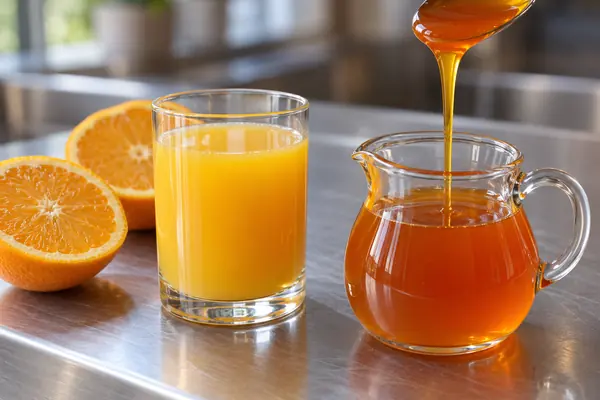
One extraction method handles over 75% of the world's citrus juice. The machine peels the orange and squeezes the juice through a strainer within a fraction of a second.
The journey thebestoj
00HOW THE JUICE GETS TO YOU
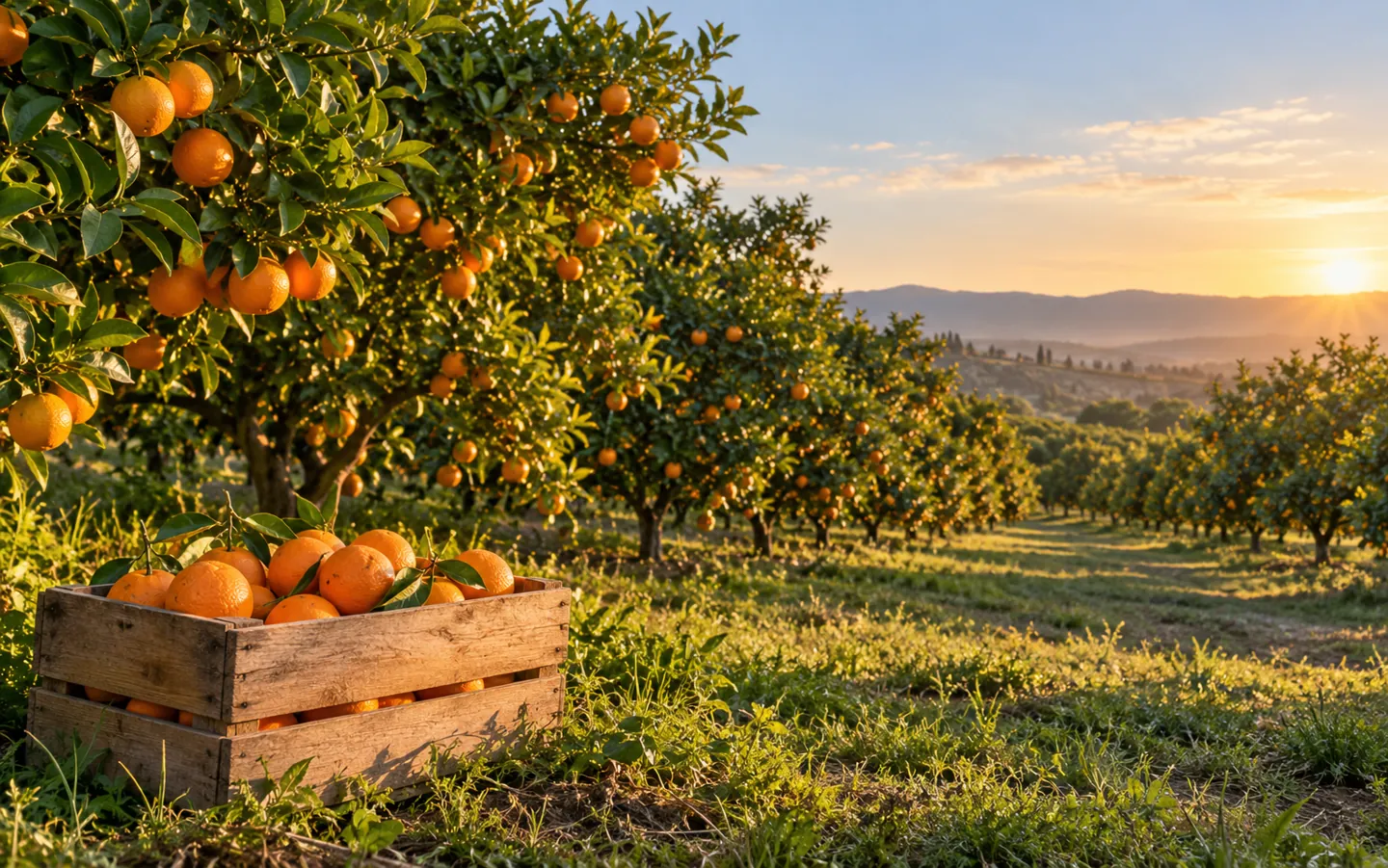
A carton of orange juice has been on quite a journey.
Most of it starts in big processing plants, where oranges are washed, squeezed, heated and then either boiled down to a thick concentrate or stored chilled for months. Here is what happens at each step, and why.
How strong is it?01Principles
02THE SHORT ANSWER
Every commercial orange juice is extracted and heated.
What happens next decides whether it is concentrate or not.
EXTRACTION
One extraction method handles over 75% of the world's citrus juice. The machine peels the orange and squeezes the juice through a strainer within a fraction of a second.
The journeyCONCENTRATE
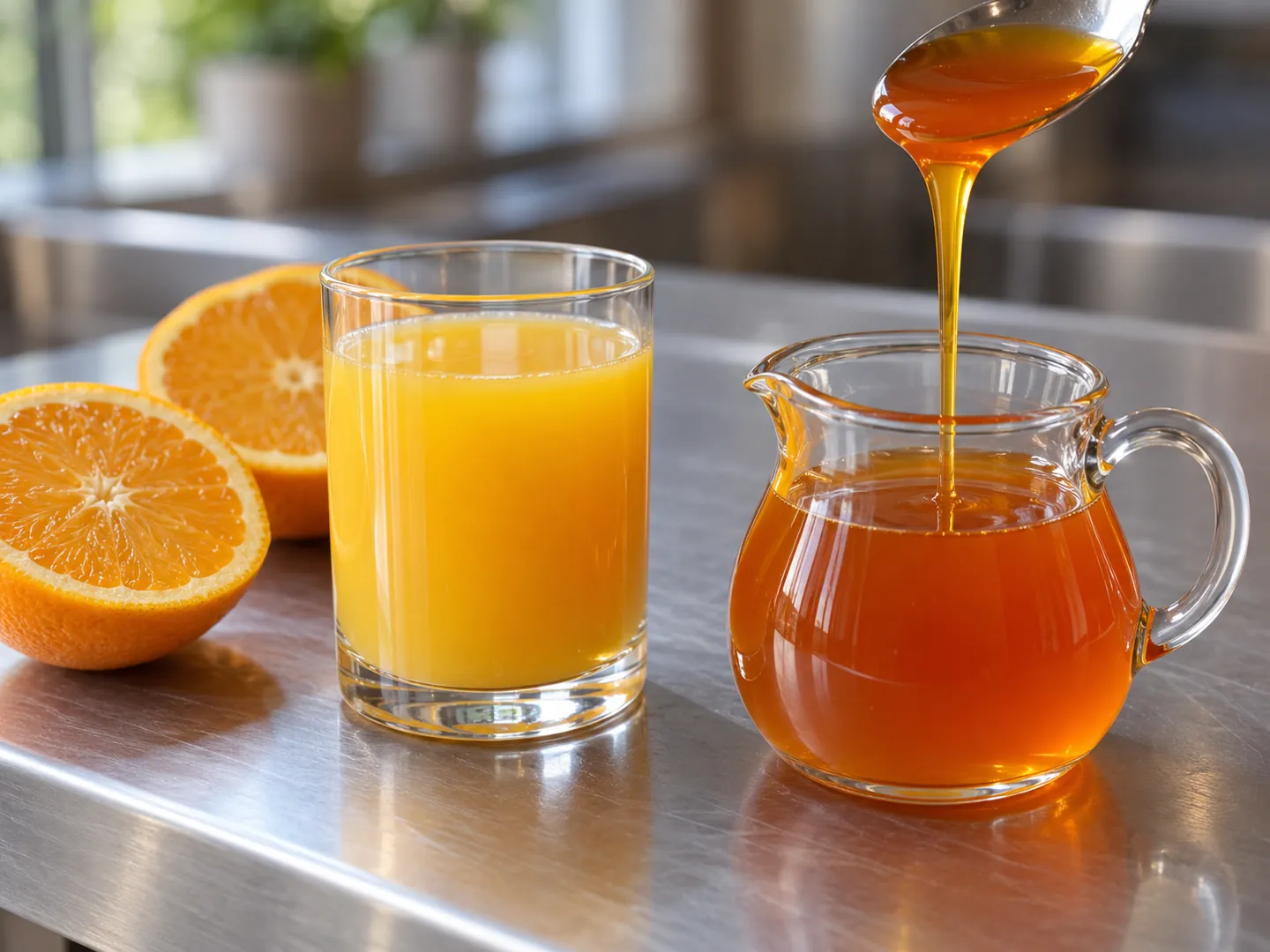
Evaporators take juice from about 12 °Brix of dissolved solids to 60–70 °Brix. A tonne of standard concentrate equals 5.4 to 5.6 tonnes of not-from-concentrate juice.
Compare the strengthsGREENING
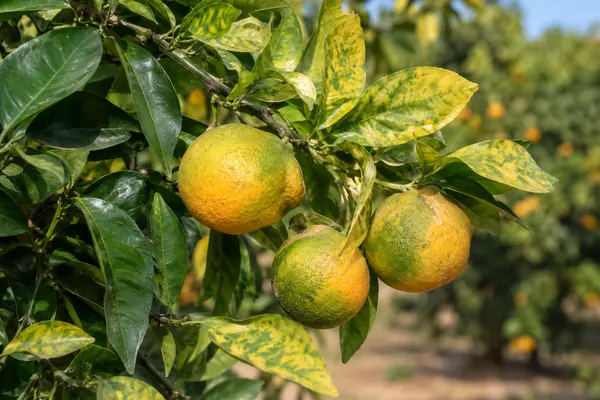
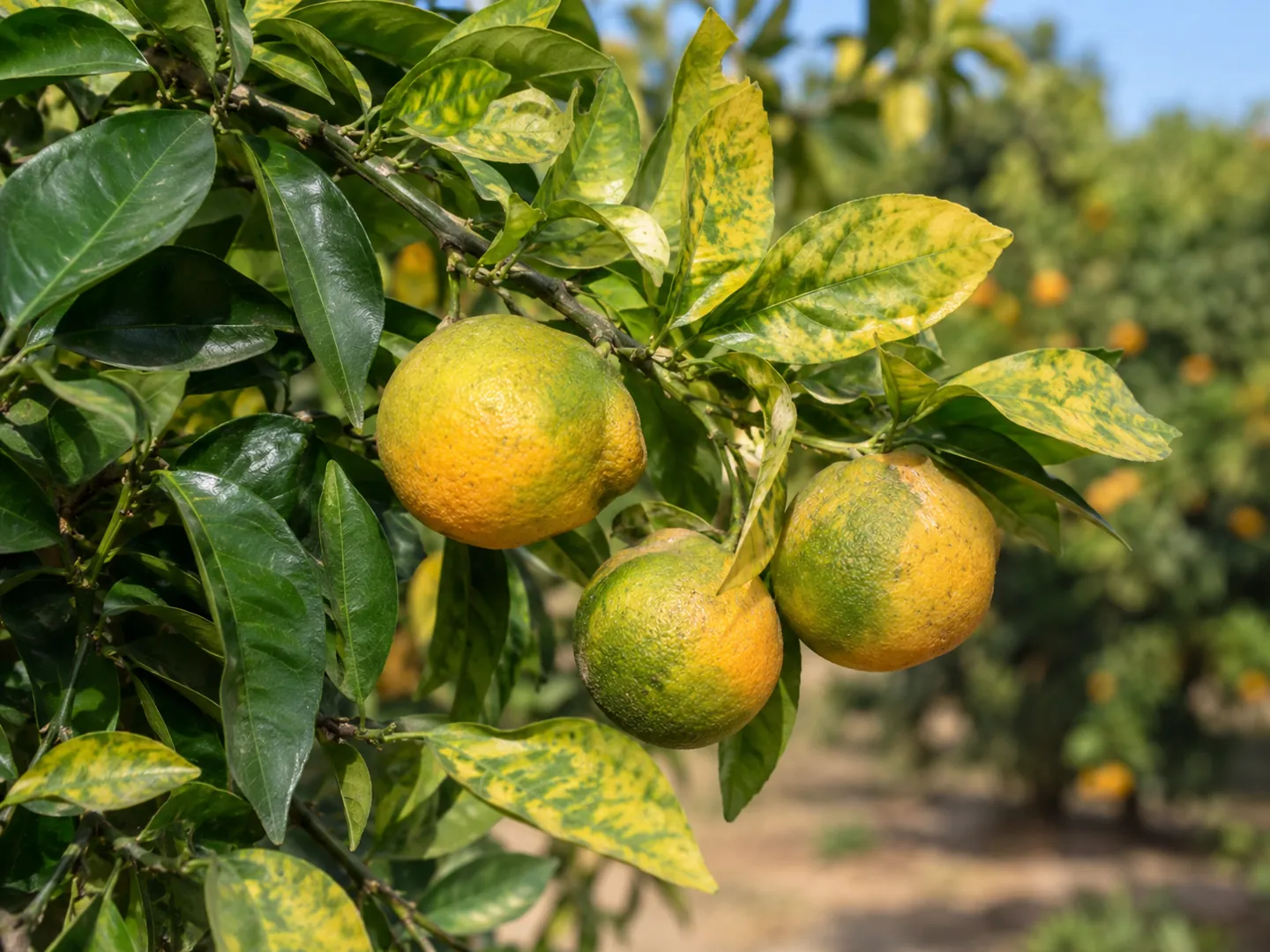
Citrus greening, or huanglongbing, affects all citrus varieties and is spread by tiny psyllids. It was found in Brazil in 2004 and had not been reported in the US before 2005.
See the numbers03A QUICK STRENGTH CHECK
Brix is a measure of the sugar and other solids dissolved in juice. Pick a form of orange juice to see its Brix value. The bar shows how concentrated it is.
Brix values are typical industry and trade figures. Individual juices vary with the fruit and the season.
04TWO NUMBERS WORTH KNOWING
One figure from USDA's 2026 world forecast,
one from the way trade measures juice.
1.0 of 1.4 million t
Brazil's share of world orange juice
USDA forecasts global orange juice production at 1.4 million tonnes for 2025/26, with Brazil making 1.0 million tonnes as more oranges go to processors. Brazil's orange crop is helped by improved practices to manage citrus greening.
2025/26 FORECAST · USDA FAS
5.4–5.6 t
Not-from-concentrate juice per tonne of concentrate
USDA counts 1 tonne of frozen concentrate at 65 °Brix as equivalent to 5.4 to 5.6 tonnes of not-from-concentrate juice at 11.6 °Brix. Taking the water out makes juice far lighter to ship.
TRADE CONVERSION · USDA FAS
Citrus greening: in China the disease was reported to kill young trees in 1 to 2 years, and infected young trees never come into fruit production (University of Florida IFAS, 2005).
05FOUR THINGS TO NOTICE
No lab needed. These are things you can see and taste in an ordinary glass of orange juice.
The haze in orange juice is a cloud of tiny particles of pectin, protein and oils that carries colour and aroma. Heating juice for about a minute at 90 °C stops an enzyme that would make it settle out.
Limonin is a natural bitter compound in citrus. Valencia oranges have very low levels and suit not-from-concentrate juice; navel oranges are recommended for blends.
A little peel oil adds flavour, but too much gives a burning sensation and can drown out the delicate aromas. Plants control how much ends up in the juice.
Mixing concentrate with water is called reconstituting. You are putting back roughly what the evaporator took out at the plant.
06A WARTIME INVENTION
In 1942 three researchers were given $8,000 and an old USDA laboratory in Winter Haven, Florida, to find an orange juice concentrate that could carry vitamin C to soldiers. It took them three years. Their trick, the cutback process, was to add a little fresh juice back to the concentrate to restore flavour, then freeze it. A patent followed in 1948.
By 1949, Florida plants were producing over 10 million gallons of concentrated orange juice. Today concentrate is stored in tank farms kept at -10 to -18 °C, in tanks of up to 250,000 gallons, while not-from-concentrate juice can be kept in aseptic tanks holding up to a million gallons each.
07Questions
Mostly to save weight. Evaporators remove much of the water so the juice is lighter and cheaper to transport. USDA counts one tonne of standard concentrate as equal to 5.4 to 5.6 tonnes of not-from-concentrate juice.
It is pasteurised gently and stored in bulk, mostly in aseptic tanks, which replaced the early frozen blocks. Large producers can keep juice in aseptic storage, with the oxygen removed, for up to a year.
It stands for Thermally Accelerated Short Time Evaporator, the standard concentrating unit in the citrus industry. Juice passes through once and loses its water as vapour in a very short time; the aroma carried off with it can be recovered and added back.
Also called huanglongbing or HLB, it is a bacterial disease spread by psyllids. It affects all citrus varieties and makes fruit sparse, small, abnormal-looking and slow to colour, with poor juice quality. Infected mature trees may decline and become non-productive.
Citrus contains limonin, a natural bitter compound. Valencia oranges have very low levels, which is why they suit not-from-concentrate juice. Too much peel oil can also give a harsh, burning taste.
08Sources
ABOUT THIS NAME
thebestoj.com is part of the DoodleSale portfolio. It isn't in an auction right now, but you can ask about leasing it.